
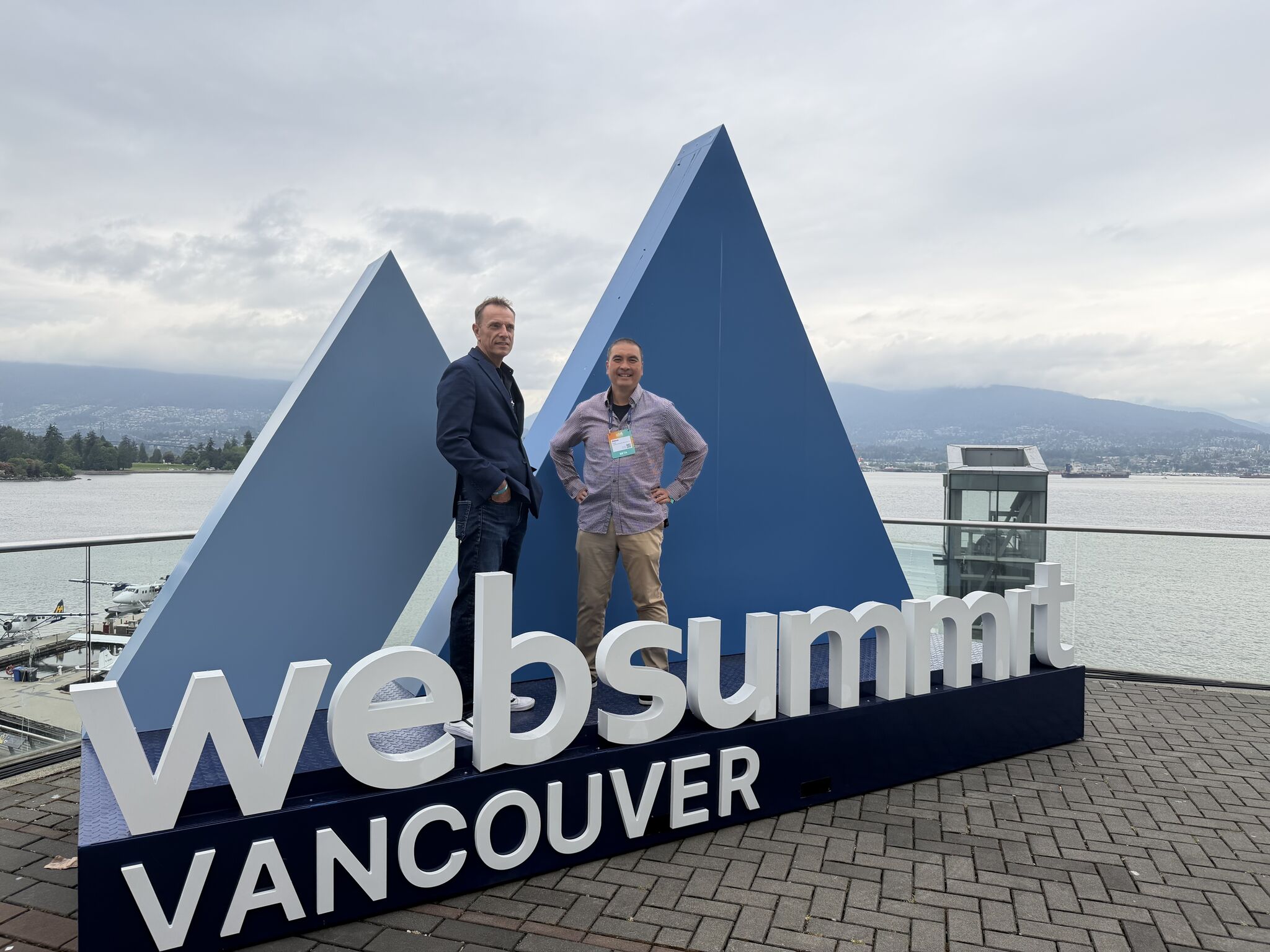
Most Important Thing We Noticed at Web Summit 2026
Just one year ago, nearly every discussion around AI began in the same place:
"What do you think about this AI stuff?”
- Fast forward to today, and the tone has completely shifted. The opening question is no longer theoretical. It’s decisively practical:“We know we need AI — what’s the best way to actually go about it?”
This shift is significant.
From Curiosity to Pressure
Last year, teams were experimenting. This year, they’re being asked to deliver. Leadership isn’t asking if AI matters; they’re asking where it fits, how quickly it can be deployed, and what returns it can generate.
That pressure is forcing a much more grounded set of questions:
- Where does AI actually create leverage within our business?
- How do we integrate it into existing workflows without breaking what already works?
- How do we move quickly without introducing new layers of risk, complexity, or governance issues?
These are not theoretical challenges. They are operational ones. And they require a completely different mindset than the early-stage exploration most companies were focused on just a year ago.
The End of “AI for the Sake of AI”
Another clear signal from Web Summit is that the market is maturing — fast.
The appetite for generic AI tools and broad, horizontal platforms is fading. Organisations are becoming more selective and far more outcome-driven. There is less interest in capabilities for their own sake, and more focus on measurable impact.
In practical terms, this means:
- AI initiatives are being evaluated based on ROI, not innovation theatre
- Workflow-level integration is prioritised over standalone tools
- Execution speed is competing directly with governance and control
This is where many teams are getting stuck. It’s not a lack of tools or models — those are abundant. The challenge is figuring out how to apply them in a way that actually improves performance without introducing friction elsewhere.
The Shift from “If” to “How”
If there’s one line that summarises the shift over the past year, it’s this:
We’ve moved from “if” to “how.”
That may sound simple, but it represents a major transition in how organisations approach technology adoption. The early adopters and experimenters have done their part. Now the broader market is stepping in — and they’re looking for proven pathways, not possibilities.
The companies that will win in this phase aren’t the ones chasing every new model release or jumping on every emerging tool. They’ll be the ones that stay focused on:
- Practical applications within real workflows
- Clear, defensible ROI
- Human-centred execution that enhances, rather than disrupts, how work gets done
The Conversation Has Grown Up
Web Summit made one thing obvious: the AI conversation has matured.
What was once driven by hype and speculation is now shaped by constraints, trade-offs, and real business outcomes. This is where the real work begins — not in exploring what’s possible, but in delivering what actually works.
For organisations, that means shifting from experimentation to implementation. From ideas to systems. From curiosity to capability.
And for operators, builders, and decision-makers, it means one thing above all:
The question is no longer whether to use AI.
It’s how well you can deploy it.